DeepSeek V4 and the Open-Weight Price Ceiling
Open weights near the frontier on published scores. The useful question is what that equivalence is measuring — and what it buys you.
Jump to 4 sections
DeepSeek shipped a V4 Flash variant in mid-September 2026, extending a line whose defining feature is not capability but price. Open-weight releases from this family have repeatedly landed within reach of closed frontier models on published coding benchmarks while costing one or two orders of magnitude less to run.
The interesting question is not whether an open-weight model can match a frontier model on a benchmark. Several now do, on some benchmarks. The question is what that equivalence is actually measuring.

What the published numbers claim
Reporting around the V4 line puts its strongest variant near 80% on SWE-bench Verified, described in several trackers as the leading published open-weight result on that benchmark. Comparable scores are claimed for other open families in the same window.
Two caveats belong on that number before anyone plans around it. SWE-bench Verified is a 500-problem subset of real GitHub issues, and scores on it depend heavily on the agent scaffolding wrapped around the model — the retry budget, the test-execution harness, whether a verifier filters candidate patches. A model scoring 80% inside one team's harness is not directly comparable to 80% inside another's.
The second caveat is contamination. Public benchmarks built from public repositories are exactly the material that ends up in pretraining corpora, and the research literature has documented score inflation from this repeatedly. The maintainers publish methodology and problem sets at the SWE-bench project site, which is the right place to check what a given number covers.
Model Drop has not reproduced these results. We treat published open-weight scores with the same skepticism as vendor charts, for the reasons set out in our guide to reading a model launch announcement.
What "open weights" does and does not mean
It means the parameters are downloadable and you can run inference wherever you like. It does not mean the training data is published, the training code is reproducible, or the license permits every commercial use.

That distinction matters legally and practically. Several major open-weight families ship under permissive MIT or Apache 2.0 terms; others use custom licenses with acceptable-use clauses or scale thresholds attached. Read the license file in the repository rather than the announcement — they routinely differ in emphasis, and model cards on Hugging Face's model hub carry the authoritative terms.
What open weights genuinely buys you is optionality. You can run the model in your own environment for data-residency reasons, fine-tune it on proprietary data without shipping that data to a vendor, pin a version indefinitely, and avoid the alias drift that affects hosted APIs. None of those are capability advantages. All of them are governance advantages.
The cost argument, honestly
Hosted open-weight endpoints undercut frontier APIs dramatically — cents per million input tokens against roughly $10 at the flagship band, a gap we lay out in our breakdown of LLM API pricing across the 2026 tiers.
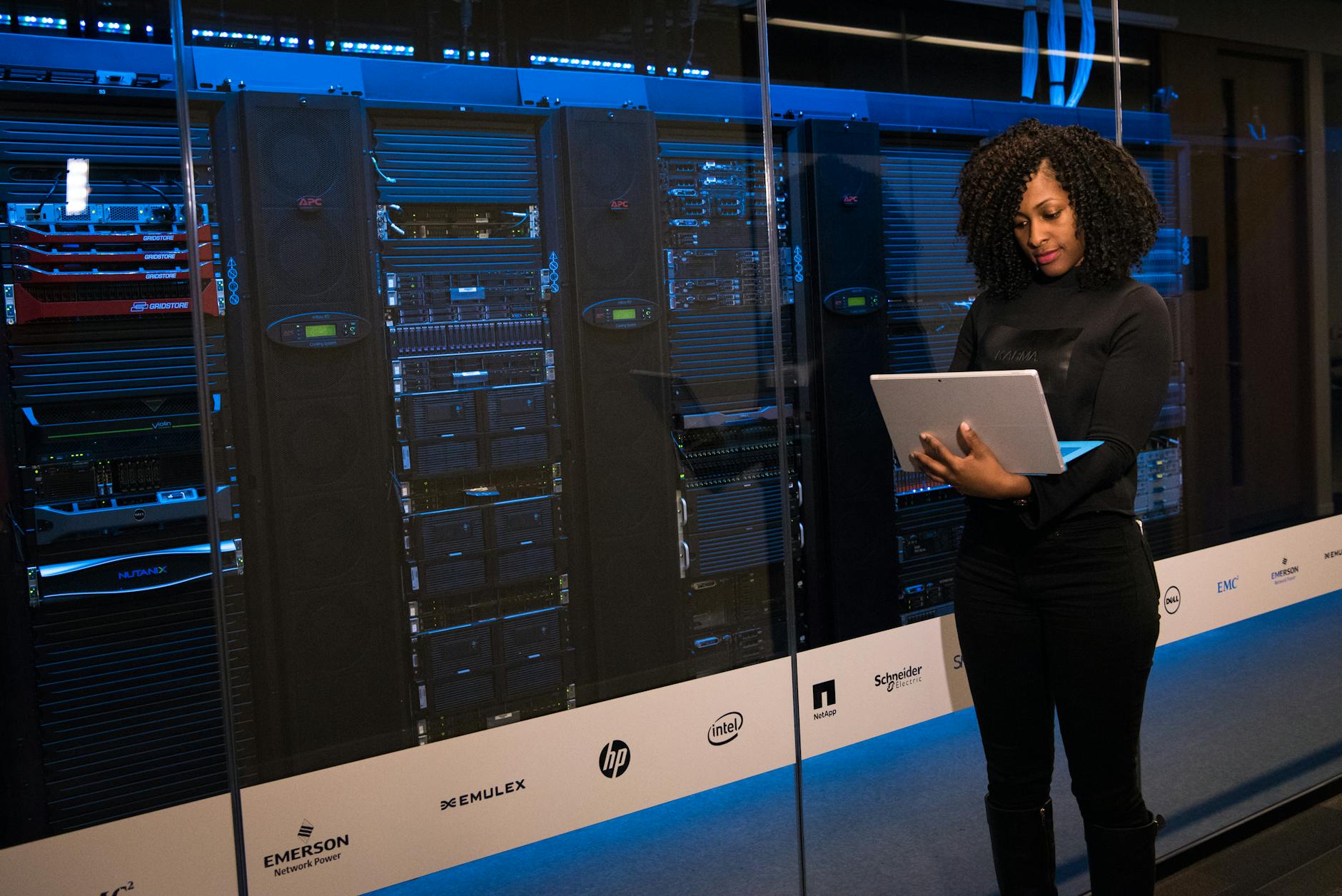
Self-hosting is a different calculation, and the naive version of it is usually wrong. GPU rental, idle capacity, engineering time, and the operational burden of serving infrastructure all land on your side of the ledger. Below a certain sustained throughput, a hosted endpoint is cheaper than running the same weights yourself, even though the weights are free.
There is a quality-of-evidence point here too. Standardized inference benchmarks with fixed methodology and audited submissions — the model MLCommons uses for its MLPerf suites — tell you far more about real serving throughput than a capability score does. Throughput and cost per token are what determine whether self-hosting works, and they are measured by entirely different tests than the ones that make headlines.
The threshold depends on utilization more than anything else. A model serving steady traffic around the clock amortizes a reserved GPU well. One serving bursty daytime traffic pays for a lot of idle silicon.
Why this release matters beyond the benchmark
The competitive effect is the real story. Each open-weight release that lands near the frontier compresses what closed labs can charge for equivalent capability, which is visible in how quickly cheap tiers have proliferated across every major vendor this year.
At Model Drop we read the open-weight track less as a set of products to adopt and more as a price ceiling being enforced from below. Whether you ever run these weights, they affect what you pay for the ones you do run.
By Ashley Quon, Contributing Writer at Model Drop. Reported September 2026. Benchmark figures cited are as published by third-party trackers and vendors and have not been independently reproduced by Model Drop.
Model Drop covers AI launches — new models, platforms, features, and tools — for the people who have to decide what to actually ship on.


