Hugging Face Carbon-X Review: A 14.8B Open DNA Chat Model and the Claims Worth Checking
Carbon-X scores 66.7% against GPT-6.1 Sol's 67.5% on Hugging Face's own tests. The model card also lists weak spots and a hardware bill most labs can meet.

Jump to 11 sections
Carbon-X is an open-weight model from Hugging Face, released October 22, 2026, that reads raw DNA in a chat and answers in English. It has 14.8 billion parameters and an Apache 2.0 license. On Hugging Face's own tests it averages 66.7%, just behind GPT-6.1 Sol at 67.5%, with clear limits listed on the card.
This review is for researchers, platform engineers and AI teams who want to know whether an open model for genomics is worth running locally. It covers what Carbon-X is, how its benchmark claims hold up, what hardware it needs, and where the model card admits weakness. Model Drop checks launch claims against the documentation and the fine print, and a model that mixes DNA and chat needs more care than most.
What Is Carbon-X and Who Built It?

Carbon-X is a chat and text-generation model that accepts DNA and natural language together. A user pastes a DNA sequence, asks a question and gets an answer with an explanation. Hugging Face built it with collaborators at the Telethon Institute of Genetics and Medicine, the University of Naples Federico II and the Zhongguancun Academy, per the model card and The Next Web's coverage.
It starts from Alibaba's Qwen3-14B. According to the model card, training used about 10 billion tokens for vocabulary extension and 302 billion tokens of mid-training. It then used supervised fine-tuning for three epochs and two rounds of reinforcement learning on about 98,000 and 58,000 prompts.
The supported tasks are variant-effect prediction, which asks whether a DNA change is likely harmful, plus identifying regulatory regions, classifying sequences by organism group, predicting the next bases and explaining its reasoning. Thinking mode is disabled.
How Does Carbon-X Score Against Frontier Models?
Hugging Face reports an average of 66.7% for Carbon-X, with thinking disabled. The model card lists these averages for comparison models:
| Model (setting) | Average score |
|---|---|
| GPT-6.1 Sol (max) | 67.5% |
| Carbon-X | 66.7% |
| Claude Opus 5.5 (max) | 60.9% |
| Kimi K3 (low) | 50.4% |
| Gemini 4 Argon (low) | 49.8% |
| DeepSeek V4.1 Flash (low) | 47.1% |
| GLM-5.3 (low) | 39.8% |
The numbers come from the Carbon-X model card. They are the authors' own results, and The Next Web notes that it has not verified them. Model Drop has not run Carbon-X through its own harness, so we cannot confirm any score.
Is the Comparison Fair?
Only partly. The table mixes effort settings. GPT-6.1 Sol and Opus 5.5 ran at max effort, while Kimi K3, Gemini 4 Argon, DeepSeek V4.1 Flash and GLM-5.3 ran at low. A model at low effort is built to answer fast and cheap, so its score is not its ceiling. The bottom four rows should not be read as those models' best results.
The more useful comparison is at the top. Carbon-X, a 14.8-billion-parameter model with thinking off, lands within 0.8 points of GPT-6.1 Sol and above Opus 5.5 on this set. That is a real result if the benchmarks are well chosen. A task suite built by the model's authors tends to favor the model's training focus.
Look at the per-benchmark split. The card says Carbon-X is best on BioReason Coding at 74.9 and NextBase at 39.4. Opus 5.5 leads BioReason Non-SNV at 94.8 and FrontierVEP at 76.2, and GPT-6.1 Sol leads GenomeQA at 67.2. No single model wins everything, so the average hides who is best at which task.
Our guide on which AI model benchmarks still mean anything explains why averages and vendor-built suites call for caution.
Where Does Carbon-X Struggle?
The model card is unusually direct about weak spots. It lists splice sites at 29.8% and histone marks at 34.6%. It says the model can miscount bases or misplace coordinates, may invent sequence identities, and loses quality on long DNA generation.
Those limits matter for a DNA tool. A model that is off by a few bases can point to the wrong variant, and a confident explanation can hide the error. Treat any output as a hypothesis for a lab to test, not as a finding.
The card also says the model is not clinically validated and should not be used for medical decisions. RuntimeWire, summarizing a WIRED report, says wet-lab validation has not been done, meaning no predictions were tested in laboratory experiments, per its coverage. Both statements point the same way.
How Long a Sequence Can Carbon-X Read?
About 40,960 tokens of context. Mid-training used 8,192-token sequences, which the card equates to roughly 49,000 base pairs of DNA. The authors have not evaluated inputs much longer than those seen in training. A full human genome is billions of base pairs, so Carbon-X works on regions and genes, not whole genomes.
This is the practical ceiling for planning. If your work involves a gene locus or a regulatory window, the limit may be fine. If it involves a chromosome, plan a chunking and stitching step, and expect quality to vary at the seams.
What Does It Take to Run Carbon-X?
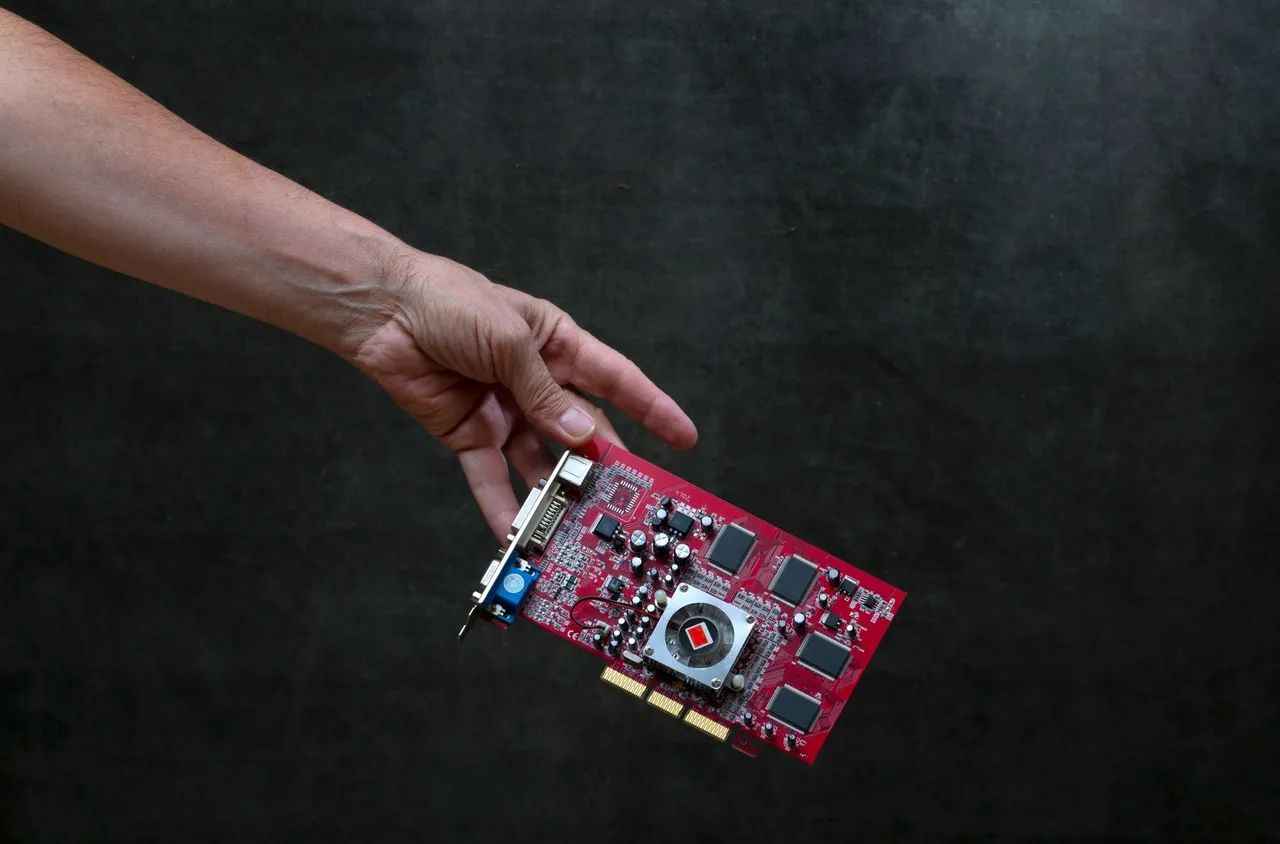
A single 80 GB GPU, per the model card, in bfloat16. That is a data center card, such as an H100 or A100 class, not a gaming GPU. It requires Transformers version 5 or later, and it loads with trust_remote_code=True because the DNA tokenizer is custom code. Serving with vLLM is supported, and the card says llama.cpp and other GGUF runtimes are not.
The trust_remote_code flag deserves attention. It runs code from the model repository on your machine. Review the repository, pin a commit and run it in an isolated environment, especially if the machine touches patient data.
The local option is the main selling point. TNW notes that labs can run the model on their own machines, so sensitive sequences do not have to leave their systems. Genetic data is highly sensitive, and the model card warns that provider handling varies. For hosted use, read the provider's data terms first. For related deployment choices, see our guide to small models that run on one GPU, and what they cost you.
How Does It Fit the Open-Weight Landscape?
Carbon-X is a domain model built on a general base. That pattern is becoming common: a strong open general model, extended with new vocabulary and tuned on specialist data. The result can match much larger general models on narrow tasks, at a fraction of the serving cost.
It also arrives with unusual context. TNW notes the release came weeks after Nvidia agreed to buy Hugging Face for about $12.9 billion, with the deal expected to close in the first half of 2027. That does not change the model, but it is useful background for anyone planning around the platform.
Our piece on open-weight versus closed models argues that the decision is not capability alone. Carbon-X fits that argument: the case for it is control, privacy and cost, more than raw score.
How Should Teams Evaluate It?
Run your own tests before trusting the average. Our rule at Model Drop is to run a fixed set of prompts and report what the vendor left out, and the same approach applies here. Follow these steps:
- Build a test set from sequences with known, lab-confirmed answers.
- Include the task types where the card shows weakness, such as splice sites.
- Run each prompt several times and record the spread.
- Check coordinates and base counts by script, not by reading the answer.
- Compare against a simple baseline, not only against another chat model.
Our guide to LLM eval tooling lists tools that can run this kind of check. A small, honest test beats a large leaderboard you did not build.
What Would Change Our View?
Three things would move this review from promising to recommended. The first is independent reproduction of the 66.7% average, ideally on a test set that Hugging Face did not build. The second is a published comparison at matched effort settings, so the rivals are not handicapped. The third is lab validation of a sample of predictions, even a small one.
Any of those would be easy to publish and hard to fake, which is why we ask for them. Until they exist, Carbon-X belongs in the research sandbox, where a wrong answer costs a few hours and not a patient outcome.
Verdict: Is Carbon-X Worth Trying?
Yes, for research teams with a spare 80 GB GPU and a clear question. It is open, locally runnable and honest about its limits. It is not a clinical tool, and its headline score rests on an unequal comparison.
Model Drop's rating, from this review of the documentation, is promising but unverified. We would not base a decision on the 66.7% until someone outside Hugging Face reproduces it.
Conclusion
Carbon-X shows how far a 14.8-billion-parameter specialist can go with open weights, and it lists its own weak spots clearly. The model card's scores, the hardware needs and the lack of lab validation all point to the same advice.
Your next step is a small trial on sequences you already know the answer to. If Carbon-X holds up there, it earns a place in the workflow. If not, you have saved yourself a wrong turn.